Unit 1
Biological Bases of Behavior
Neurons, neurotransmitters, the nervous system, and the brain regions behind sensory and stress responses.
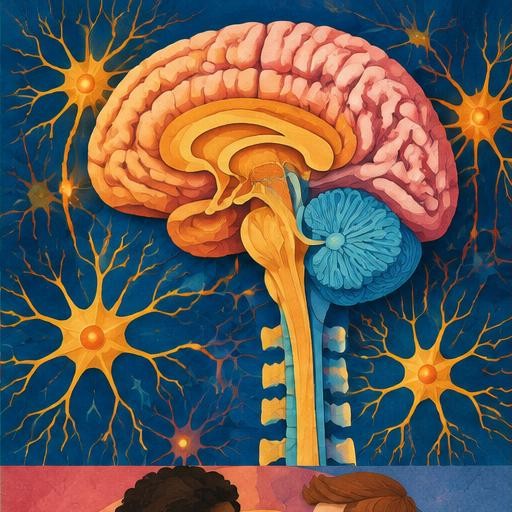
Neurotransmitters
Glutamate & GABA
The excitation/inhibition balance theory suggests autistic brains may have more excitatory (glutamate) relative to inhibitory (GABA) signaling, which could explain why sensory input feels 'turned up'. Still a theory, not settled fact.
Neurotransmitters
Dopamine
Dopamine drives reward and motivation. Interest-based nervous systems may get strong dopamine from special interests and very little from boring tasks, which links to both fixations and trouble starting work.
The Nervous System
Sympathetic vs. parasympathetic
Sensory overload and anxiety both trigger the sympathetic fight-or-flight response. Slow breathing activates the parasympathetic rest-and-digest side, which is why it actually helps.
Brain Structure & Core Regions
Thalamus & sensory gating
The thalamus relays sensory signals and helps filter what doesn't matter. Differences in that filtering may let more noise and light through at full volume.
Limbic System
Amygdala
The brain's alarm system can't tell a test from a tiger. A hyper-reactive amygdala helps explain why a loud cafeteria or an unanswered text can feel like an emergency.
The Cerebral Cortex
Frontal lobe / prefrontal cortex
Executive functions like planning and task initiation depend heavily on the frontal lobe. Differences here help explain wanting to start something and still not starting.
Endocrine System
Cortisol & adrenal glands
Chronic stress keeps cortisol high, which drains energy and weakens immune function, one piece of the burnout picture.
Sensation Foundations
Absolute threshold & sensory adaptation
Many autistic people have lower thresholds for some senses and adapt less, so a humming light never fades into the background.
States of Consciousness & Sleep
Circadian rhythm & sleep
Sleep problems are very common in autism and make anxiety, overload, and burnout worse.
These connections are study aids, not medical advice. Some ideas (like the excitation/inhibition theory) are still being researched.