Essay
Autism and Romantic Relationships: What the Research Shows and How to Navigate Love
Jul 6 · 9 min read
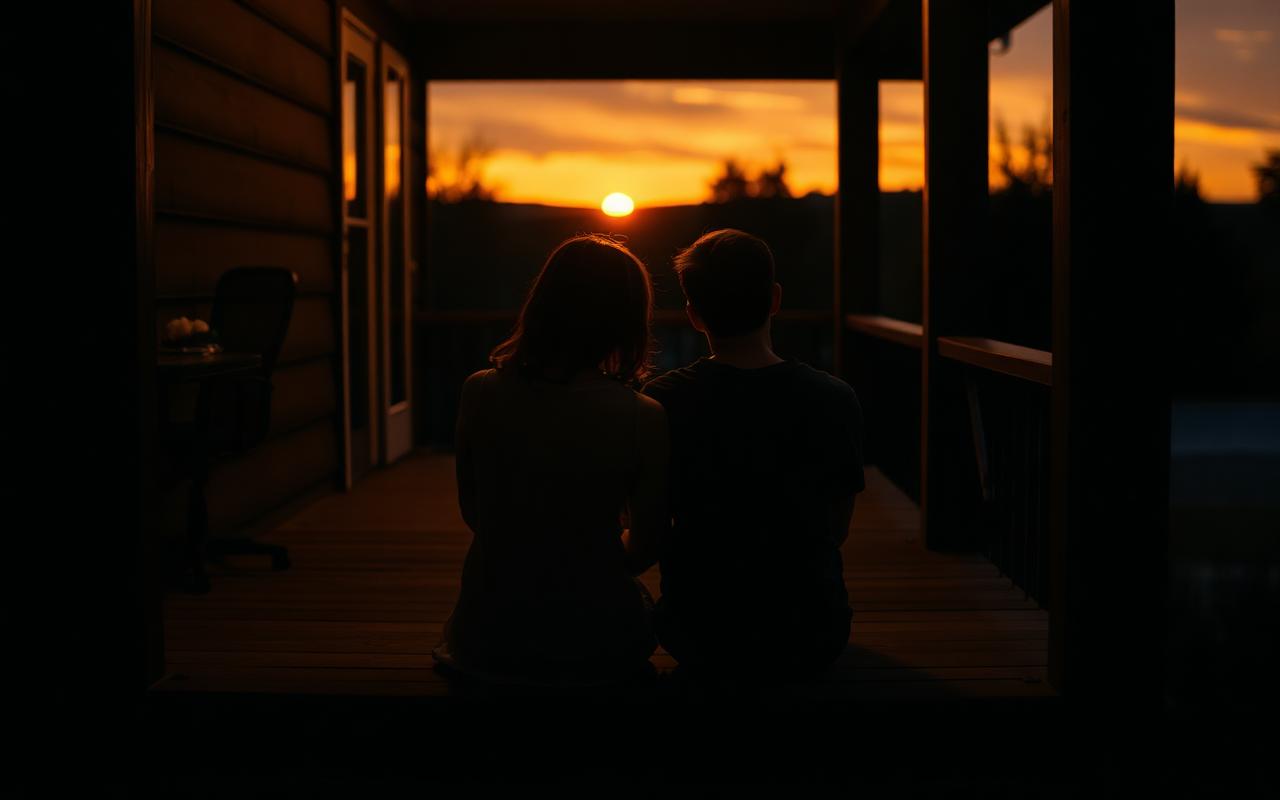
One of the most persistent myths about autism is that autistic people don't want romantic relationships, or aren't capable of the closeness those relationships require. Research says otherwise, and it isn't close. A large systematic review found that autistic people report levels of interest in romantic relationships similar to non-autistic people. The gap isn't desire. It shows up later, in how much harder the road to starting and keeping a relationship can be.
This post looks at what research actually shows about autism and romantic relationships, why connection can look and feel different for autistic people, where couples tend to get stuck, what helps, and where to find support, whether you're autistic yourself or you love someone who is.
What the Research Shows
Autistic people consistently report wanting intimate, committed relationships at rates that mirror the general population. The gap isn't motivation. It's initiation and maintenance; starting things, reading interest, keeping momentum, and navigating norms that a lot of dating runs on without anyone ever spelling them out.
Research on intimacy finds the same basic ingredients matter for autistic and non-autistic people alike: honest communication, shared values, feeling safe and respected, and a willingness to keep working on the relationship. But autistic participants specifically point to something extra as a barrier, a persistent uncertainty about relationship norms and communication expectations that non-autistic partners often absorb without ever having to think about them.
One of the more useful recent findings comes from a 2025 study in the journal Autism in Adulthood, which compared relationship satisfaction across different pairings: both partners autistic, one autistic partner with a neurotypical partner, and one autistic partner with a partner who is neurodivergent in some other way. Satisfaction didn't differ significantly between these groups. What did predict satisfaction, across every pairing, was "partner responsiveness," whether each person felt understood, validated, and genuinely responded to by the other. Not shared neurotype. Not compatibility as an abstract idea. Being met.
That finding matters because it quietly disproves two competing myths at once: that autistic people can only be happy with another autistic partner, and that mixed-neurotype relationships are doomed from the start. Neither holds up. For a long time, autistic-autistic couples were barely studied at all, most research only looked at mixed pairings. That's only recently starting to change, which says less about autistic relationships and more about how young this field of research still is.
It's worth naming the strengths that show up again and again in this research, too, not just the friction. A 2025 content analysis of over a decade of studies found autistic people that may face challenges such as sensory sensitivities, stigma, and communication barriers can also have their own benefits. Autistic partners are also frequently described in terms of pattern recognition and unusually honest, direct communication. Traits that make dating harder in a world built around subtext can make a relationship, once it's established, unusually trustworthy.
Why Connection Can Feel Different
There's no single reason romantic relationships take more deliberate work for a lot of autistic people. A few things tend to layer on top of each other.
The double empathy problem. In 2012, autistic researcher Damian Milton proposed that the social difficulties long blamed entirely on autistic people are actually a two-way mismatch. Autistic and non-autistic people often have different default styles of reading emotion and interpreting social cues, and both sides struggle to read the other, not just one. That reframes a lot of what gets written off as bad social skills in dating. A blunt comment, a flat tone, a missed unspoken cue; these aren't deficits so much as two different operating systems trying to talk without a shared manual.
Masking and the authenticity gap. Many autistic people camouflage traits specifically to build relationships; softening bluntness, forcing eye contact, laughing on cue, holding back a special interest that's dying to come out. It works, in the sense that it can get someone through a first date or a first year. But it's exhausting to sustain, and it creates a strange problem: a partner can fall for a performance before ever meeting the person underneath it. I've lived this, an entire first few months spent being careful, easy, low-maintenance, and then finally letting the mask slip. My partner ended up meeting someone they technically hadn't been dating before. That's a vulnerable moment. It's also usually where the real relationship starts.
Sensory sensitivities and intimacy. Touch, sound, lighting, texture, and physical closeness can register very differently in an autistic nervous system. A hug that's comforting to one person might feel static to another. That's not pickiness, and it isn't a rejection of the partner. It's sensory information that needs to be named and negotiated rather than assumed, its the variation every human being has.
Alexithymia. Some autistic people have real difficulty identifying or naming what they're feeling, even in the moment they're feeling it most intensely. In a relationship, this can look like distance or disinterest when it's actually emotional overload with no label attached yet.
Old wounds, carried forward. Plenty of autistic adults reach dating age with a long history of being teased, excluded, or told they were reading people wrong. That history doesn't stay in the past. A neutral text, a partner going quiet after a hard day, a joke that lands wrong. These things can trigger a much bigger reaction than the moment calls for, because part of you still remembers every other time silence turned out to mean something was wrong.
Special interests, shared or not. Talking at length and in depth about a topic you love (sometimes called info-dumping) is, for a lot of autistic people, one of the most intimate things they can offer someone. Whether it lands as a connection or falls flat usually comes down to whether a partner understands it as a gift rather than a monologue.
Deciding when to say it out loud. There's no universally right time to tell a partner you're autistic. Many people find it's easier to name it plainly, early, than to keep re-explaining the same pattern five different ways as it comes up.
Where Couples Get Stuck
Some patterns show up often enough to be worth naming directly, because they tend to get misread from both sides:
- Needing silence or downtime after socializing gets read as losing interest, when it's usually just recovery from sensory or social overload.
- Direct, literal communication gets read as coldness, when it's often an attempt to be as honest and unambiguous as possible.
- Heavy masking gets mistaken for things going smoothly, when it's often quietly draining one partner toward burnout.
- The same argument keeps resurfacing because it traces back to an expectation that was never actually agreed on out loud.
- A flat, matter-of-fact tone during a hard conversation gets read as not caring, when the same person may care enormously and just express it differently.
None of these patterns mean a relationship is failing. Usually they just mean something needs to be said out loud that's currently being assumed.
What Helps
Say the unspoken thing. Most of what trips up neurodiverse couples isn't a values mismatch, it's an assumption nobody checked. Naming expectations plainly, about texting, alone time, affection, or plans, does more for a relationship than almost anything else on this list.
Agree on signals ahead of time. A simple, agreed-upon way to say "I need quiet right now" or "I'm overwhelmed, not upset with you" can defuse a lot of conflict before it starts.
Look for a neurodivergent-affirming couples therapist. Standard couples counseling isn't always built with neurodivergent communication styles in mind. Organizations that specifically train therapists in neurodiverse couples work exist for a reason, and it's worth seeking that specific experience out rather than a generalist.
Treat sensory needs as information, not inconvenience. Talking openly about what kind of touch, environment, and pacing feels good, and what doesn't, takes the guesswork out of intimacy for both people.
Make room to unmask, at least at home. A relationship where one person has to perform constantly isn't sustainable long-term. The most secure relationships tend to be the ones where masking can come down, at least some of the time.
Find community. Hearing from other neurodivergent people navigating the same terrain can be validating in a way that's hard to replicate one-on-one, and can surface practical strategies a therapist might not think to mention.
A Note for Partners
If you love an autistic person, a few things are worth carrying with you.
Directness usually isn't an attack. If something is said bluntly, it's generally safe to take it at face value rather than searching for a harsher hidden meaning.
Needing to withdraw after a long day or a social event isn't a comment on the relationship. It's a nervous system recharging, and it usually has nothing to do with how things are going between you.
Ask directly, rather than expecting your partner to pick up on hints. "What would help right now?" will get you further than waiting for them to guess what you're also not saying.
And it's worth knowing that autistic partners are frequently described, by the people who love them, as some of the most loyal, honest, and deeply committed people they've been with. The version of someone that's still there once the mask comes down is usually the one worth adjusting for.
Resources
- AANE (Association for Autism and Neurodiversity) — aane.org runs a Neurodiverse Couples Institute and maintains a directory of trained couples therapists.
- Neurodiverse Love — neurodiverselove.com offers a podcast, a docuseries, and support groups built specifically for neurodiverse couples.
- Autistic Self Advocacy Network (ASAN) — autisticadvocacy.org, run by and for autistic people.
- Autism Society of America — autismsociety.org has broader resources on autism in adulthood, including relationships and community.
Connection is absolutely possible, and the research backs that up. It might take more explicit conversation than you've seen modeled anywhere else, and it might not look like what you pictured going in. That doesn't make it any less real.